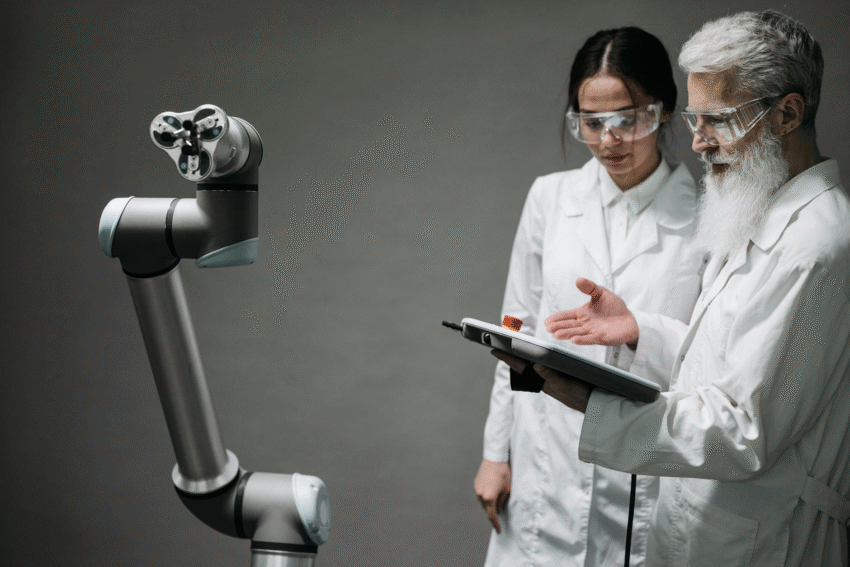
Alphabet’s Google has significantly bolstered its artificial intelligence capabilities by opening its largest AI infrastructure hardware engineering center outside the United States in Taiwan. This strategic move underscores the growing importance of hardware in the AI revolution and highlights Taiwan’s pivotal role in the global tech supply chain.
Taiwan: The New Epicenter for AI Hardware Innovation
The new facility in Taiwan, inaugurated on Thursday, represents a substantial investment by Google in the foundational infrastructure that powers AI development. While much of the recent AI discourse has focused on software and large language models, this development brings a critical hardware component to the forefront. Taiwan, already a powerhouse in semiconductor manufacturing, is now poised to become an even more crucial player in the AI hardware ecosystem.
Taiwan’s President lauded the opening as a significant moment, emphasizing the island’s contribution to global technological advancement. This is not merely about expanding Google’s physical footprint; it’s a strategic acknowledgment of the intricate relationship between advanced chip design, efficient manufacturing, and the escalating demands of AI computations. The center is expected to drive innovation in areas such as AI accelerators, high-performance computing, and the specialized hardware required for training and deploying complex AI models.
Economic and Geopolitical Ripples
The implications of this investment extend beyond the tech sector. For Taiwan, it reinforces its position as a critical node in global technology production, potentially attracting further investment and talent. It also amplifies the geopolitical significance of the island, as leading tech nations and corporations increasingly rely on its manufacturing prowess. This heightened importance, however, also brings increased scrutiny and potential vulnerabilities.
Economically, the demand for advanced AI hardware is projected to surge. Reports suggest that the Indian Rupee, for instance, may weaken against the US dollar, indicating broader global economic shifts. While seemingly disparate, such financial trends are often influenced by major technological investments and the resulting reallocation of capital and resources. The expansion of AI infrastructure necessitates a robust supply chain, impacting everything from raw material sourcing to specialized labor, and consequently, global currency markets.
The Evolving AI Landscape and Future Outlook
Google’s move is a clear signal that the future of AI hinges on both sophisticated software and powerful, optimized hardware. As AI models become more complex and data-intensive, the efficiency and capability of the underlying hardware become paramount. This engineering center will likely focus on developing next-generation components that can handle the immense computational loads of advanced AI research and deployment.
Looking ahead, we can anticipate a continued race among tech giants to secure and innovate within the AI hardware space. This could lead to:
- Increased collaboration between AI software developers and hardware engineers.
- Further investment in specialized semiconductor manufacturing and design.
- Heightened geopolitical considerations surrounding the control of advanced AI hardware production.
- Potential for breakthroughs in AI performance driven by hardware advancements.
While the outlook for AI technology remains exceptionally bright, with transformative potential across industries, this hardware-centric development also serves as a reminder of the complex ecosystem involved. Ensuring the security and resilience of this infrastructure, particularly against threats like the TamperedChef malware campaign, will be crucial. As AI becomes more embedded in our lives, the robustness of its physical underpinnings, supported by strategic global investments like Google’s in Taiwan, will be key to unlocking its full promise.